
Bug zappers are indispensable tools for improving your outdoor experience. By reducing bothersome insects and creating a more enjoyable atmosphere, these devices provide numerous benefits for both homeowners and outdoor enthusiasts. Gaining an understanding of how bug zappers operate, what to consider when selecting one, and tips for effective use can greatly enhance your outdoor spaces. Discover how these handy gadgets can elevate your summer nights and make outdoor living more enjoyable.
What are Bug Zappers and How Do They Work? A Look into Modern Bug Control
.jpg_00.jpeg)
Bug zappers are electric devices designed to attract and kill harmful insects, such as mosquitoes and flies, using UV light and electrical discharge. These insect traps work by emitting specific wavelengths that lure pests in and then delivering a zap of electricity through electrical grids to eliminate them.
Bug zappers are commonly used for pest control in outdoor settings like backyards and patios, as well as indoors. The UV light effectively attracts insects to the device, while the electrical discharge kills them upon contact.
Available in various designs, bug zappers can be made for indoor use, such as countertop models, or for outdoor use, which are designed to cover larger areas like patios and gardens.
According to studies conducted by Cornell University on the effectiveness of mosquito traps, as well as research by Texas A&M on electric insect killers, these devices significantly reduce mosquito populations, enhancing user comfort during outdoor activities. To ensure you choose the most effective model, see also: The Ultimate Guide to Choosing the Right Bug Zapper for Your Home.
Their targeted approach and minimal environmental impact have contributed to their popularity as a pest control technology.
Benefits of Using Bug Zappers: Eco-friendly Pest Control and Effective Solutions
The advantages of bug zappers include their effectiveness in reducing the population of mosquitoes and other harmful insects during the warmer months. These devices offer an environmentally safe and chemical-free pest management solution for outdoor spaces, endorsed by entomologist-approved practices.
By utilizing UV light and electrical discharge, bug zappers significantly decrease the number of mosquitoes and other unwelcome pests, greatly enhancing the outdoor living experience. This allows users to enjoy warm summer evenings outside without the constant annoyance of swatting away irritating and biting insects. They complement traditional bug sprays by offering a more sustainable approach.
Additionally, bug zappers are easy to use and require minimal maintenance. For those curious about how bug zappers compare to other methods, the discussion on Bug Zapper vs. Traditional Repellents provides valuable insights.
Bug Zapper Effectiveness Data
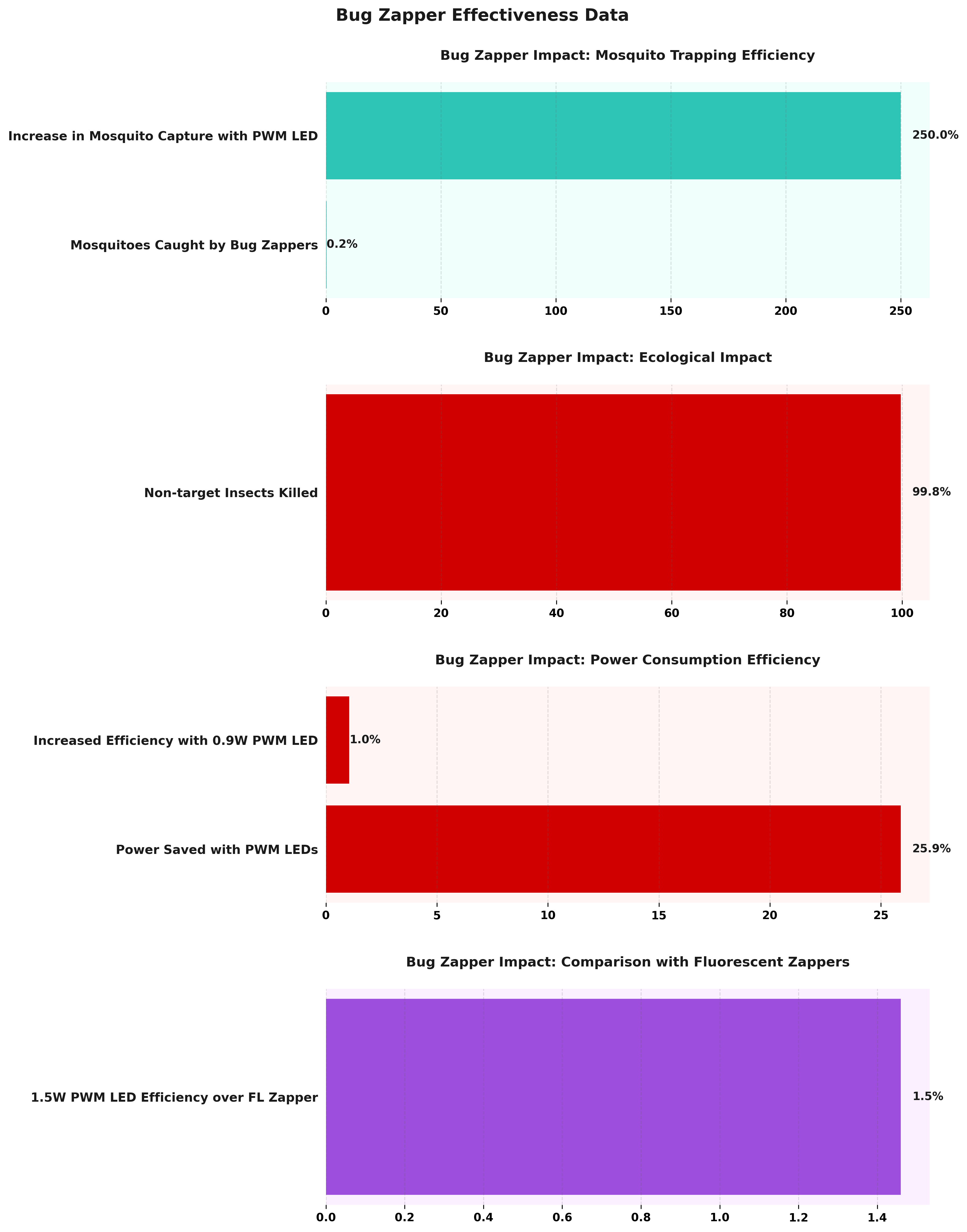
The Bug Zapper Effectiveness Data provides insights into the functionality, ecological impact, and energy consumption associated with bug zappers, particularly focusing on those equipped with PWM (Pulse Width Modulation) LEDs compared to traditional fluorescent models.
Bug Zapper Impact data highlights the relatively low mosquito trapping efficiency of conventional bug zappers, capturing only 0.22% of mosquitoes. This suggests that while bug zappers are common, their effectiveness in targeting mosquitoes specifically is minimal.
- The introduction of PWM LEDs significantly enhances mosquito capture rates by 250%. This improvement suggests that adopting PWM technology can greatly increase the efficacy of bug zappers in mosquito control, addressing one of their primary shortcomings.
- Ecological Impact: However, the data also reveals a substantial downside, with 99.78% of non-target insects being killed. This high collateral damage indicates a significant ecological impact, potentially disrupting local ecosystems by affecting non-pest insect populations.
- Power Consumption Efficiency: The transition to PWM LEDs not only improves trapping efficiency but also enhances energy efficiency. There’s a 25.9% power saving observed with the use of PWM LEDs, alongside a 1.04% increase in efficiency for units with 0.9W PWM LEDs.
In a Comparison with Fluorescent Zappers, the 1.5W PWM LED zappers exhibit a 1.46% increase in efficiency over fluorescent models. This marginal improvement in energy efficiency, coupled with better mosquito capture rates, positions PWM LED-equipped zappers as a more effective and environmentally considerate choice.
Overall, while PWM LED technology enhances the mosquito-targeting capability and energy efficiency of bug zappers, the ecological impact on non-target insects remains a significant concern. Future designs may need to focus on minimizing these unintended effects to balance pest control efficacy with ecological responsibility.
Reduction of Insects and Pests in Outdoor Spaces
.jpg_01.jpeg)
One of the primary advantages of bug zappers is their ability to enhance outdoor environments by reducing the presence of insects and pests in areas designated for gatherings and relaxation.
Utilizing UV light, these devices attract a wide range of harmful insects, including mosquitoes and flies, and effectively eliminate them within their operational radius. This pest control significantly improves comfort during summer evenings and enhances the overall quality of outdoor living, highlighting the crucial role that bug zappers play in this process.
Research has demonstrated that insect bug zappers can reduce mosquito populations by as much as 90% in treated areas, which is associated with a substantial decrease in biting insect activity.
While the effective radius of a typical bug zapper ranges from about 50 to 100 feet, many devices are not designed for or marketed with this effective range in mind. Consequently, without careful consideration of their placement, these zappers may not perform as effectively as users expect.
Proper positioning is essential, as bug zappers function best when they intercept flying insects before they reach humans. For instance, placing them along the path of individuals walking toward the house from the road or between the house and wooded areas where mosquitoes are abundant can optimize their effectiveness.
Additionally, positioning them in areas where people congregate—such as patios, porches, and near picnic or grilling spots—can further enhance their performance.
Improvement of Outdoor Living Experience
Bug zappers enhance the outdoor living experience by providing an effective way to control mosquitoes and other pests. Summer evenings are often a time when families and friends gather outside to enjoy each other’s company; however, the presence of harmful insects like mosquitoes can be quite disruptive. Bug zappers attract and kill flying insects, allowing people to enjoy their time outdoors without the nuisance of bites.
To further improve the outdoor experience, combining bug zappers with plants that repel pests creates a beautiful outdoor area with fewer harmful insects. For optimal effectiveness, bug zappers should be strategically placed around social areas, such as patios and picnic spots, ensuring they operate under the most efficient conditions.
Incorporating plants like lavender or citronella not only adds aesthetic appeal but also provides an additional layer of defense against pests, making outdoor gatherings more comfortable and reducing the likelihood of insect encounters. Regular maintenance of both bug zappers and these pest-repelling plants contributes to a more enjoyable outdoor living experience.
Factors to Consider When Choosing a Bug Zapper
.jpg_10.jpeg)
When selecting the best bug zapper for your needs, consider the following important factors:
- Size and Coverage Area: The size of the bug zapper will determine the area it can cover. Larger units are designed for bigger outdoor spaces, while compact models are suitable for indoor use or smaller areas.
- Power Source: Bug zappers can be either electric or battery-operated. Electric zappers plug into an outlet and operate continuously, whereas battery-operated zappers offer portability and can be taken nearly anywhere. Many battery-operated models also function as lanterns, making them ideal for summer evenings in varied outdoor spaces.
- Energy Efficiency: If you are concerned about your environmental impact, consider battery-operated models that use recycled batteries or electric zappers designed for energy efficiency. For more insights on choosing the right model, check out The Ultimate Guide to Choosing the Right Bug Zapper for Your Home.
Size and Coverage Area
The size and coverage area of bug zappers are critical factors that directly affect their effectiveness in managing insect populations, particularly in outdoor spaces. Considering the effective radius ensures optimal pest elimination.
When selecting a bug zapper, it is important to strike a balance between the need for a broad effective radius and potential limitations in portability and aesthetics.
For example, in expansive areas such as large backyards or open gardens, a larger model can cover a significant distance, ensuring that fewer pesky insects disrupt gatherings.
In contrast, in smaller outdoor settings like balconies or cozy patios, a compact design can provide targeted pest control while minimizing the risk of attracting bugs from nearby environments.
Each setting requires a thoughtful assessment of how size relates to coverage, as making the right choice can significantly enhance the overall outdoor experience.
Power Source and Energy Efficiency
.jpg_11.jpeg)
When choosing a bug zapper, the power source and energy efficiency are crucial factors for consumers who want to minimize energy consumption while maximizing pest control effectiveness. Electric bug zappers typically require a direct power source, whereas battery-operated models offer greater portability for use in various locations. For example, brands like Flowtron or ASPECTEK are often highlighted in outdoor product reviews for their reliability and efficiency.
Selecting an energy-efficient model can help lower electricity costs and support eco-friendly pest control efforts, aligning with the increasing demand for sustainable and environmentally conscious outdoor products. The best bug zappers are those that are energy-efficient and effective in attracting insects.
By evaluating the advantages and disadvantages of different power sources, users can make informed decisions regarding their pest control solutions. For example, electric models often provide continuous operation without the need for frequent battery changes, making them more convenient for users facing larger infestations. Indoor bug zappers can be particularly efficient in managing pests without the use of harmful chemicals. However, they may incur higher electricity costs if they are not energy-efficient.
In contrast, battery-operated zappers offer portability and convenience but typically require regular battery replacements, which can raise concerns about waste and overall energy consumption. These zappers often use UV light and can be a good alternative to chemical-based solutions.
Innovative energy-efficient designs and solar-powered options can greatly enhance sustainability, allowing consumers to enjoy effective bug control without negatively impacting their electricity bills or the environment. Companies like Flowtron and ASPECTEK provide various models that cater to these needs.
Tips for Using Bug Zappers Effectively
Bug zappers are most effective when certain tips are followed, enhancing their pest control capabilities and extending their lifespan. Regular maintenance includes cleaning bug zappers and ensuring they are placed correctly.
One of the most crucial factors is proper placement; positioning bug zappers away from competing light sources and closer to areas with high insect activity will significantly improve their ability to attract and eliminate pests.
Additionally, regularly cleaning bug zappers to remove dead bugs and debris is an important maintenance tip that helps ensure they operate at peak performance throughout the pest season. This approach aligns with the principles outlined in our guide to choosing the right bug zapper for your home.
Placement and Maintenance
The placement and maintenance of bug zappers are critical factors that enhance their effectiveness in controlling insect populations.
For optimal results, bug zappers should be strategically positioned in areas with high insect activity and away from other light sources that might distract pests. This strategy aligns with research from Cornell University and Texas A&M.
Regular maintenance is equally important; cleaning bug zappers to remove accumulated debris and dead insects is essential for ensuring they operate efficiently throughout the pest season. This easy maintenance routine can significantly enhance the performance of the device. Proper placement not only maximizes the chances of attracting unwanted insects but also improves energy efficiency. Using insect attractants like octenol can amplify the zapper’s effectiveness.
Choosing locations near stagnant water, such as ponds or birdbaths, can significantly increase catch rates. Understanding insect behavior can help in selecting the best spots. Routine cleaning every few weeks is crucial, as grime accumulation can impede light output and reduce the device’s attraction to insects. This is an important part of easy maintenance.
Additionally, users should check and replace worn-out UV bulbs annually to maintain optimal performance. Brands like Better Homes & Gardens often recommend this in their product details. By creating a clean and strategically designed environment for their bug zappers, individuals can enjoy prolonged benefits and effectively minimize insect nuisances during the warmer months. This aligns with recommendations from the University of Delaware and the University of Florida.