

As summer nights beckon, the battle against pesky insects and ensuring effective insect control becomes a familiar routine.
With a variety of options available, many wonder whether bug zappers or traditional repellents are more effective for managing insect populations.
This article explores how each method works, compares their effectiveness against different types of bugs, and addresses safety and environmental concerns.
Insights will help you choose the right option based on your personal needs and preferences. Say goodbye to those unwanted guests and enjoy your outdoor spaces!
Effectiveness of Bug Zappers and Traditional Repellents
.jpg_00.jpeg)
The effectiveness of bug zappers and traditional repellents plays a crucial role in insect control, particularly as outdoor spaces become increasingly popular for leisure activities.
Bug zappers attract flying insects using effective attractants that leverage insects’ natural behaviors, such as positive phototaxis, to draw them in and dispose of them safely.
In contrast, traditional mosquito repellents often contain chemical insecticides, which may pose risks to family safety and the environment.
Bug Zapper vs. Repellent Effectiveness Data
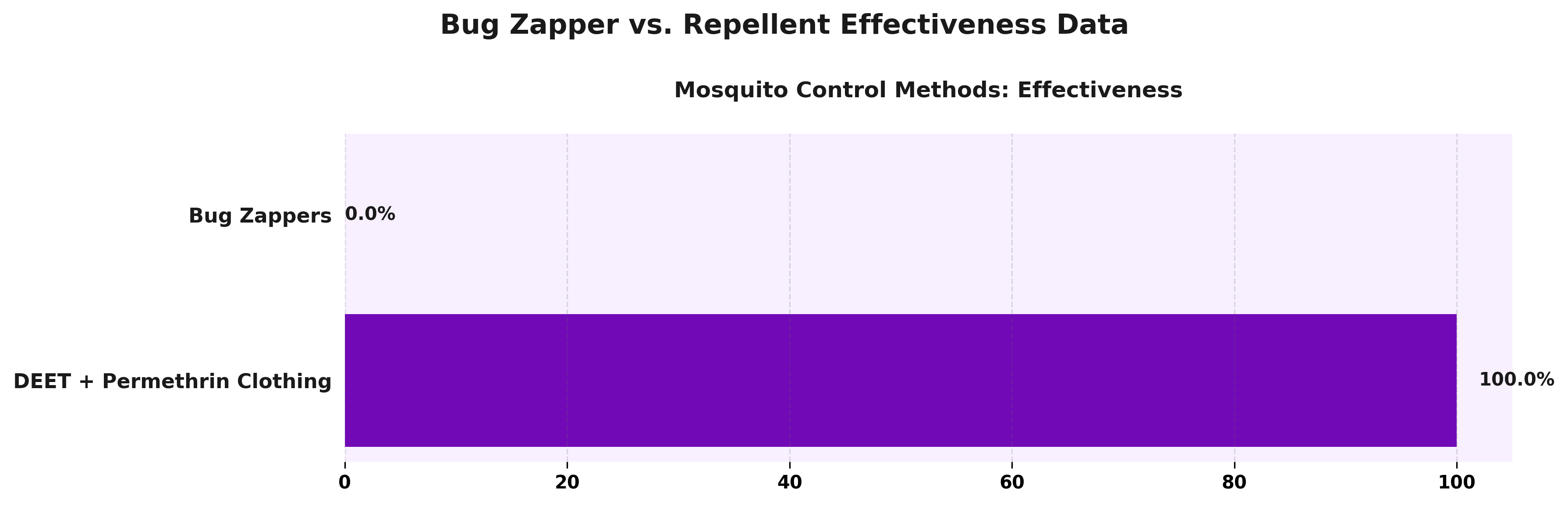
The Bug Zapper vs. Repellent Effectiveness Data provides insights into the comparative effectiveness of different mosquito control methods, focusing on DEET combined with permethrin-treated clothing and bug zappers.
Mosquito Control Methods reveal a notable contrast in effectiveness. DEET + Permethrin Clothing is rated at 100% effectiveness, highlighting its role as a robust defense against mosquito bites. This combination leverages two powerful agents: DEET, a widely-used insect repellent, and permethrin, an insecticide applied to clothing, which together create a formidable barrier against mosquitoes. This method is particularly beneficial for individuals in mosquito-prone areas, offering complete protection when used correctly.
On the other hand, Bug Zappers do not have a specified effectiveness percentage in this dataset, which may imply variability or lack of consistent results in mosquito control. Bug zappers attract insects using light and then eliminate them through an electric grid. However, they are often criticized for being ineffective against mosquitoes, as mosquitoes are not primarily attracted to light but rather to carbon dioxide and body heat emitted by humans. This limitation suggests that while bug zappers may reduce some insect populations, they might not be the most efficient choice for targeting mosquitoes specifically.
In summary, the data underscores the superior effectiveness of using DEET and permethrin-treated clothing for mosquito control, providing a complete protective measure. In contrast, the indeterminate effectiveness of bug zappers suggests a need for alternative or supplementary methods to achieve significant mosquito reduction.
Comparison of Effectiveness Against Different Types of Bugs
.jpg_01.jpeg)
Bug zappers are particularly effective in outdoor settings during warm months, targeting seasonally active flying insect populations. They utilize insect lures to attract unwanted flying insects and then eliminate them with electric grids. On the other hand, traditional mosquito traps are more effective against mosquitoes because they mimic human breathing patterns through carbon dioxide emissions. This makes them especially efficient in areas with stagnant water, where mosquitoes breed.
Each method has its advantages and disadvantages. Bug zappers are easier to set up and maintain; however, they can unintentionally attract beneficial insects, disrupting local ecosystems. Certain mosquito traps are more effective in the long term as they continuously lure their targets throughout the day using propane or chemical attractants. User opinions on both devices vary widely. Many people find bug zappers visually and audibly satisfying, while others prefer the quieter operation of mosquito traps, which are similarly effective against insects.
Overall, effective insect control is best achieved through a combination of methods beyond just traps and zappers. Regular yard maintenance, removing standing water, and strategically placing mosquito traps contribute to creating an environment that is less hospitable to mosquitoes and other pests.
One specific model, the Flowtron electronic insect killer, features durable polycarbonate construction, maximizing durability while effectively controlling insect populations.
Flowtron Electronic Insect Killer Features and Specifications:
- Brand: Flowtron
- Type: Bug Zapper
- Lure Source: Electricity, Light, Metal, Carbon Dioxide, Propane, Chemical, Octenol, Butyric Acid, Lactic Acid, Ammonia, Acetic Acid
- Material: Polycarbonate
- Indoor/Outdoor: Both
- Size: To be determined
- Weight: 10 Pounds
- Power: 100 Watts
- Price: $122.99
- Where to Buy: Amazon, Walmart, Lowe’s, International Pest Control, DoMyOwn, Hometown Pest Control
Safety and Environmental Concerns
.jpg_10.jpeg)
Safety and environmental concerns play a crucial role in the selection of insect control solutions, as many consumers are increasingly aware of the potential harm caused by chemical exposure and noise pollution from electric traps.
Understanding the implications of the harmful chemicals commonly used in traditional insect repellents and insecticides is essential for keeping families safe and ensuring that outdoor spaces remain conducive to relaxation and activities.
Consequently, many individuals are now seeking more environmentally friendly options that adhere to the health guidelines established by organizations such as the Asthma and Allergy Foundation of America. For an extensive analysis of this trend, our comprehensive study on smart insect control solutions examines the benefits and drawbacks of various methods.
Potential Risks and Harmful Chemicals
.jpg_11.jpeg)
The potential risks associated with harmful chemicals in traditional insect repellents, such as DEET, include their long-term effects on both health and the environment.
Many conventional insecticides used in pest control have raised concerns due to chemical exposure, prompting consumers to seek effective alternatives that prioritize safety. Recent studies suggest that repeated exposure to these chemicals may lead to various health issues, including neurological disorders and endocrine disruption.
The implications for wildlife and overall ecosystem health are alarming, as these substances can persist in the environment long after they have been applied. Understanding the ingredients in these products is crucial; consumers need to be informed about what they are using in their homes and gardens.
Fortunately, an increasing number of eco-friendly pest control solutions, including botanical repellents and physical barriers, are emerging. These alternatives not only ensure safety for humans and pets but also contribute to the sustainability of our environment.
Choosing the Right Option for You
The final factor to consider when selecting the best insect control method for your outdoor spaces is to assess your personal needs and preferences. This is particularly important in terms of convenience, the maintenance required, and the overall effectiveness of various pest control solutions.
With a wide range of products available—ranging from bug zappers to do-it-yourself solutions and environmentally friendly options—it is essential to carefully consider how your preferred method of insect control aligns with your lifestyle and safety protocols.
This way, you can ensure both the protection of your outdoor spaces and the safety of your family are maintained.
Considerations for Personal Needs and Preferences
When selecting insect control solutions, personal needs and family safety are major factors that determine the best option for your outdoor environment. Prioritizing convenience, ease of cleanup after treatment, and long-term protection without compromising personal well-being can greatly influence the successful use of products such as electric traps, mosquito repellents, and various other insect control methods.
Additionally, the types of outdoor activities a family enjoys can impact their choices. For instance, families who like to entertain guests during summer weekend barbecues may prefer quick-acting repellents or outdoor foggers, while those with children and pets might opt for non-toxic options that effectively address seasonal nuisances.
Safety measures, such as strong screening products that prevent bites and stings, are also important considerations, allowing the entire family to enjoy the outdoors comfortably.
There is a wide range of consumer products available to accommodate differing lifestyles, including:
- Plant-based insect repellents and other natural solutions for the environmentally conscious
- Barrier sprays with long-lasting effects for families who spend more time outdoors
By carefully evaluating these needs, families can choose insect control solutions that maximize both comfort and safety during those lovely summer evenings spent outdoors.
Maintenance Tips for Bug Zappers and Repellents
Both bug zappers and mosquito repellents require regular maintenance to remain effective, and neglecting this maintenance can lead to a decline in performance over time. Proper pest management and pest control methods are essential for long-lasting protection.
For bug zappers, maintenance involves regularly cleaning the collection tray and checking the electric grid for functionality. Bug Zappers like Dynatrap® and DynaShield® are also popular choices. In the case of mosquito repellents, such as Thermacell E90, Thermacell EX90, Thermacell MR450, Pic Mosquito Coils, and Tiki BiteFighter, maintenance includes periodic refills and ensuring that the coverage area remains optimal. Additionally, considering eco-friendly options and understanding insect behavior can improve pest deterrents.
Regarding bug zappers, best maintenance practices recommend cleaning the device at least once every two weeks during periods of high insect activity. This period often involves seasonal pests such as mosquitoes, moths, flies, mayflies, and beetles. Users should also monitor the battery life for rechargeable models and replace it as necessary, typically once per season or after heavy use. Using devices with easy cleaning and understanding the power source is key to effective methods.
Additionally, mosquito repellent devices should be stored in a cool, dry place during the off-season to prevent degradation. By adhering to these maintenance best practices and pest control tips, users can significantly extend the lifespan and overall effectiveness of these devices, ensuring they function properly when needed most. This is particularly important for garden protection, indoor traps, and outdoor spaces. Proper storage and maintenance can also aid in creating effective DIY solutions for pest control.